
The World Health Organization (WHO) defines elder abuse as a single or repeated act, or lack of appropriate action, occurring within any relationship where there is an expectation of trust, which causes harm or distress to an older person.
In Australia, elder abuse is increasingly reported. For example, the Royal Commission into Aged Care, Quality and Safety revealed shocking problems in residential aged care.However, abuse also occurs outside institutional settings as reported in the National Elder Abuse Prevalence Study released in December 2021 and conducted by the Australian Institute of Family Studies.
Elder abuse is a serious problem in Australia. It is an issue that needs policy attention, especially because of our ageing population. ABS population projections indicate that over the next 25 years the number of older people (aged over 65 years) will double to around 9 million Australians.
This report summarises the findings of the Survey of Older People (SOP), a nationally representative survey of 7,000 people aged 65 and over living in community dwellings.
Key messages
- 1 in 6 older Australians reported experiencing abuse in the 12 months prior to being surveyed
- Poor physical or psychological health and higher levels of isolation are more likely to experience elder abuse
- Almost two thirds of older people don’t seek help when they are abused (61%)
- Elder abuse remains hidden, with the most frequent action taken to stop the abuse involving the victim speaking directly to the perpetrator
- Family and friends are the most common source of support for older people who experience abuse
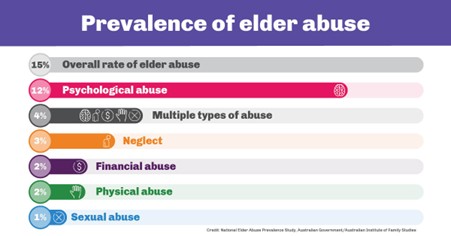
Types of Elder Abuse
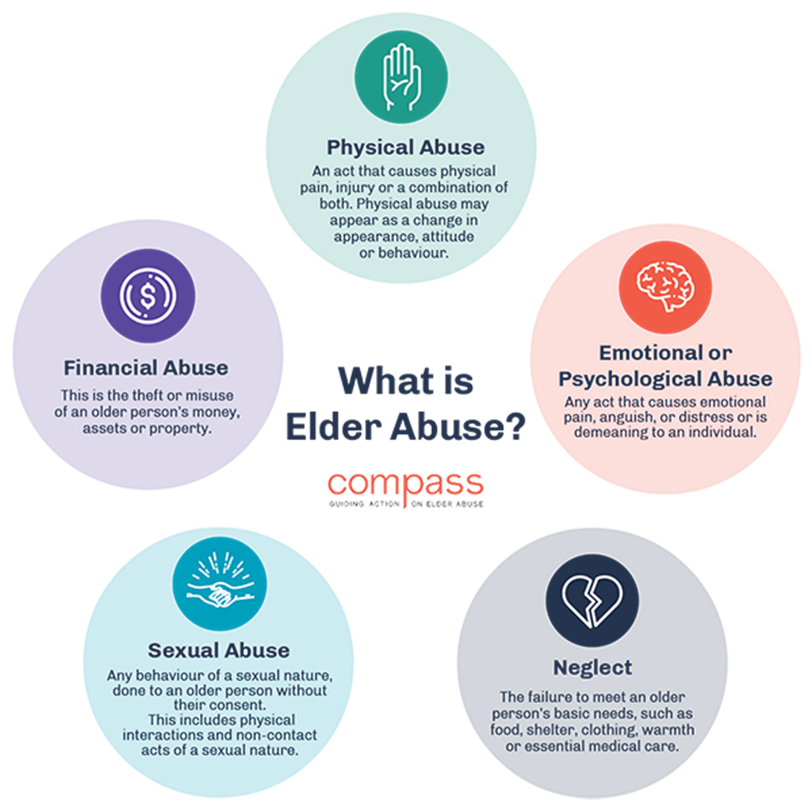
There is a broad range of conduct that amounts to mistreatment of older people. This includes social, financial, psychological, emotional, physical and sexual misconduct.
The National Plan to Respond to the Abuse of Older Australians (2019-2023) lists five commonly recognised forms of abuse of older people: financial, emotional/psychological, physical, sexual or neglect. Drilling down further, abuse can be:
- a combination of the different types of abuse
- intentional or unintentional
- occurring once or many times
- carried out by someone known to the older person, such as a family member, friend, professional or paid caregiver.