
 Subscribe to our newsletters for the latest news and updates
You will receive a confirmation mail, check your spam folder if it does not arrive in your inbox.
Stand up, speak out, because silence is never the solution
KEY FINDINGS
Australian Human Rights Commission
This report looks at how ageism affects older Australians when they access healthcare. Many patients told us they feel dismissed, spoken over, or treated as ‘just a number’. These attitudes can lead to missed diagnoses, poorer health outcomes, and even people avoiding care. We recommend action to make health care more respectful and inclusive: through better training for health professionals, co-designing age-friendly models of care, and more research on ageism and its impacts.
We wrote this report to explore older people’s perceptions and experiences of ageism within the Australian health system. Ageism in health care is a growing concern, with impacts that are harmful and far-reaching.
This research draws on:
The findings show that ageism is perceived not only in personal interactions, but also within the practices and policies of health institutions. These perceptions shape older people’s experiences of health care and affect their health outcomes.
1. Ageism is experienced across the health system, from frontline interactions to systemic policies.
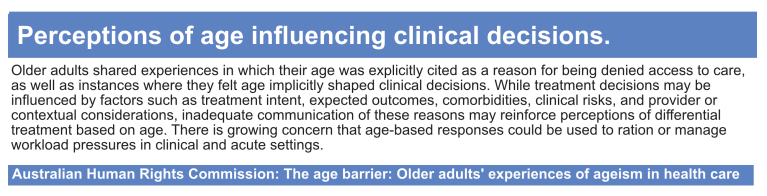
2. Older adults report feeling dismissed and excluded, being treated as a burden or spoken over.
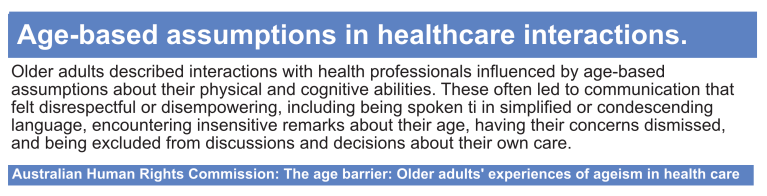
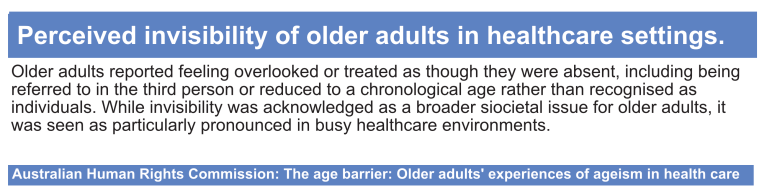
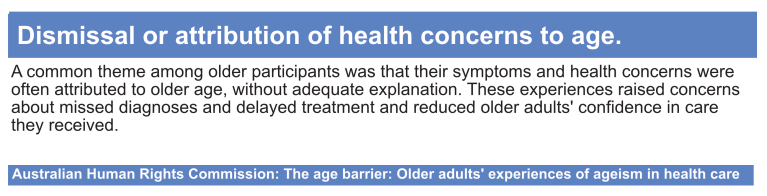
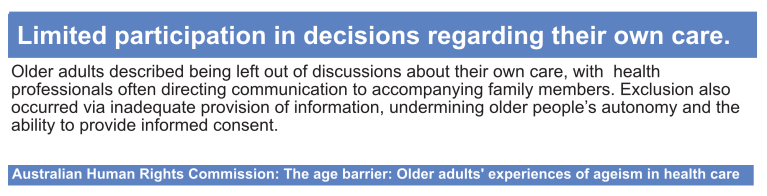
3. Common experiences include:
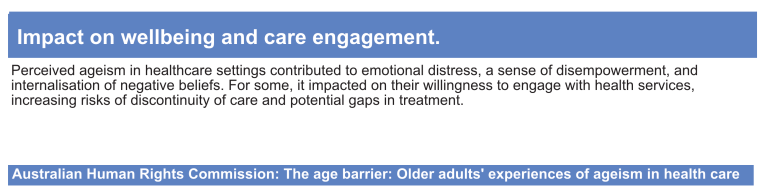
4. Consequences are serious for people and the system, and can include:
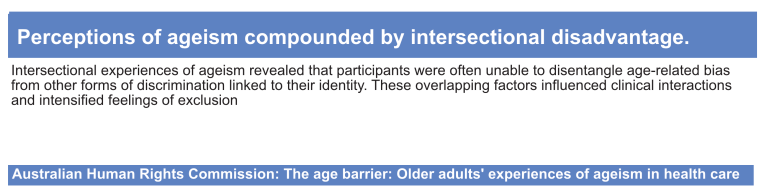
5. Ageism intersects with other discrimination, compounding disadvantage for some groups.
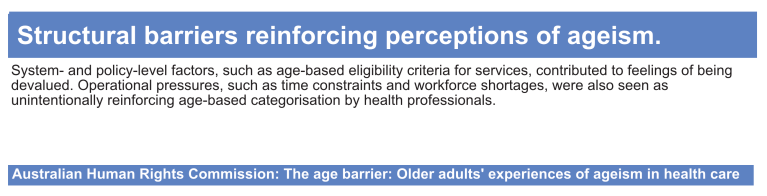
6. Structural barriers persist, including age limits on services and exclusion from medical research.
7. Internalised ageism can influence health behaviours, leading older people to avoid care or dismiss symptoms as ‘just old age’.
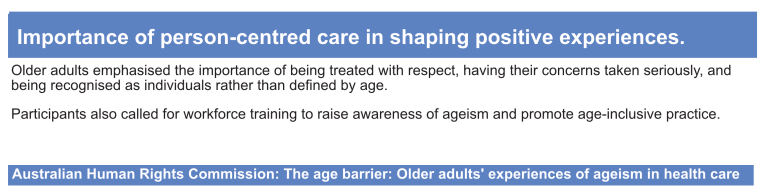
8. Person-centred care is critical, according to older people, who emphasised the importance of being treated with respect and recognised as individuals.
The report recommends urgent action across three key areas:
To help address the issues outlined in this report, the Commission has launched a new project for the health sector.
The Ageism Awareness Workshop is an interactive workshop that examines the assumptions and stereotypes commonly associated with ageing and older adults. It is backed by research and seeks to drive positive change in attitudes and behaviour towards ageism and older people.
The workshops for health workers and older people aim to build awareness of age bias, and support more inclusive, person-centred care across government, non-government and community health settings.
Source: Australian Human Rights Commission
Advocate Northern Territory lived experience can confirm the Ageism and Ageist Language exits in NT Health, Behaviours presented in Allied Health and Royal Darwin Hospital Executive management. Older persons are being excluded or dismissed from appropriate healthcare that is applicable to their needs.
 Subscribe to our newsletters for the latest news and updates